The Styling Note
Why this look
earns its place.
Fit, balance, colour, and context—explained for real-world wear.
The blue silk kurta outfit for women, piece by piece
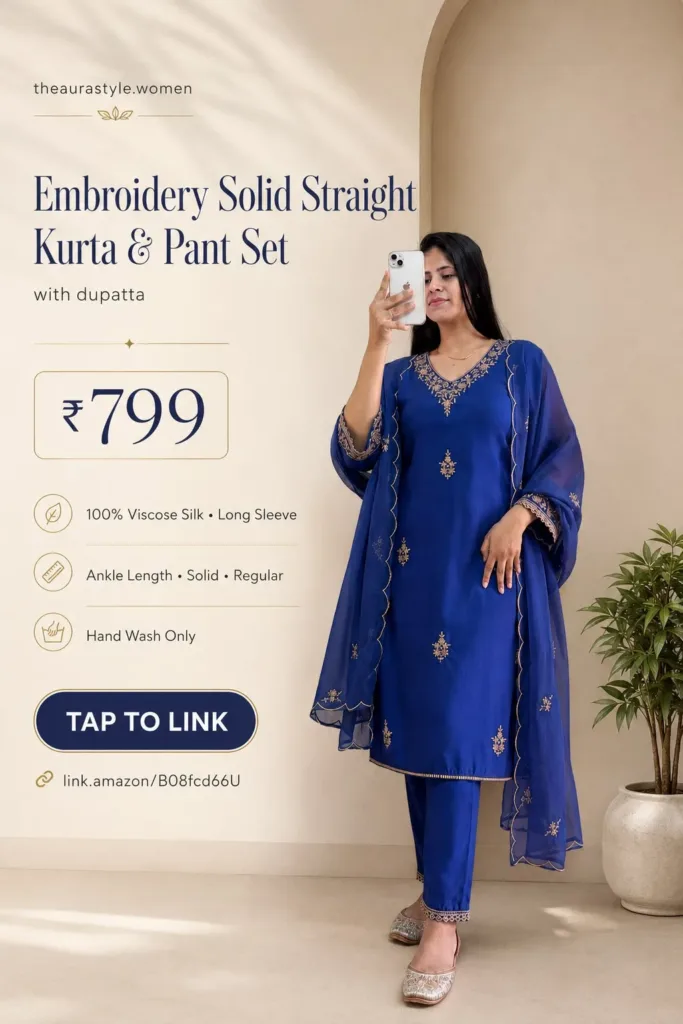
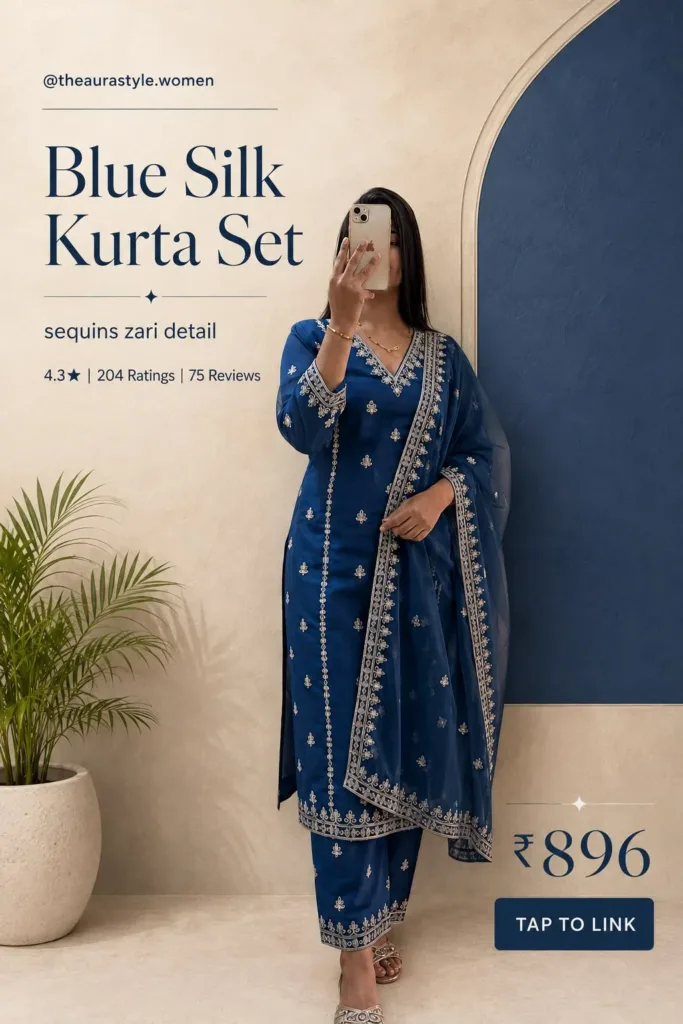
This blue silk kurta outfit for women is three pieces in one deep royal blue. The kurta is straight-cut and falls below the knee, with a V-neckline edged in zari embroidery. Across the body, small scattered motifs, little floral sprigs in metallic thread with sequin centres, spaced wide enough that the blue stays the dominant colour. A broad embroidered border runs along the hem and continues up the side slits. The three-quarter sleeves end in matching embroidered cuffs. The pants are straight and ankle-length with an embroidered border at the hem. Over one shoulder, a sheer dupatta with its own embroidered edge.
What the zari and sequins actually do
Zari and sequins exist for one reason: they catch light. On this set the metallic thread sits at the neckline, the cuffs, the hem border and the slit edges, which are exactly the lines that move when you walk. The scattered sequin buttis across the body add sparkle without weight. The result reads festive and unmistakably ethnic in photographs and in person, but the embroidery never gets heavy enough to feel like bridal wear. That balance is what makes the set work for the occasions most women actually attend.
Styling it for festive days
Let the set lead and keep everything else in its lane. Gold jewellery matches the zari: a thin chain or a small pendant at the V, a bangle or two on the wrist, small jhumkas or studs. Embellished flats or mojaris in gold pick up the metallic thread at the hem. Hair can go either way: worn down and straight for a modern read, or pulled into a low bun if you want the neckline embroidery fully visible. One strong choice among jewellery, shoes and hair is enough; two is the limit.
The dupatta, draped right
The sheer dupatta is the piece people fumble. The easiest drape, and the one in the photo, is over one shoulder with the embroidered border falling along the arm. Pin it at the shoulder so it stays put through an evening of moving around. For a more traditional read, bring both ends forward over the shoulders. What you should not do is let it hang loose and unpinned at a crowded function; sheer fabric slips, and you will spend the evening adjusting it instead of enjoying yourself.
Where this set earns its place
Diwali parties, family dinners, festive office days, small celebrations, evening aartis, dinners out during the festive season. It sits in the useful middle ground: dressier than a printed cotton kurta, lighter than anything with heavy all-over work. That makes it the set you reach for when the invitation says festive but you do not want to look like you are attending a wedding. It also photographs beautifully against both daylight and warm indoor lighting, which matters more than people admit.
Fit and care notes for silk
Silk and silk-blend kurtas fit best with a little ease through the body; too tight and the side slits pull open when you sit. Check the shoulder seam first, then the kurta length: below the knee keeps the proportions right with ankle-length pants. For care, hand wash in cold water with mild detergent or dry clean, and always dry in shade, since sun fades deep blue faster than any other colour. Store it folded, not hung, so the embroidered hem does not stretch under its own weight.
Rewearing it without repeating it
A set this distinctive gets remembered, so plan the rewear. The kurta works over plain navy or black straight pants with the dupatta left at home for a quieter festive look. The dupatta lifts a plain blue or even a beige kurta you already own. Wear the full set twice to different crowds with different jewellery and nobody registers the repeat. Festive dressing is a small rotation worn cleverly, not a new outfit every time.
 WOMEN’S STYLE