The Styling Note
Why this look
earns its place.
Fit, balance, colour, and context—explained for real-world wear.
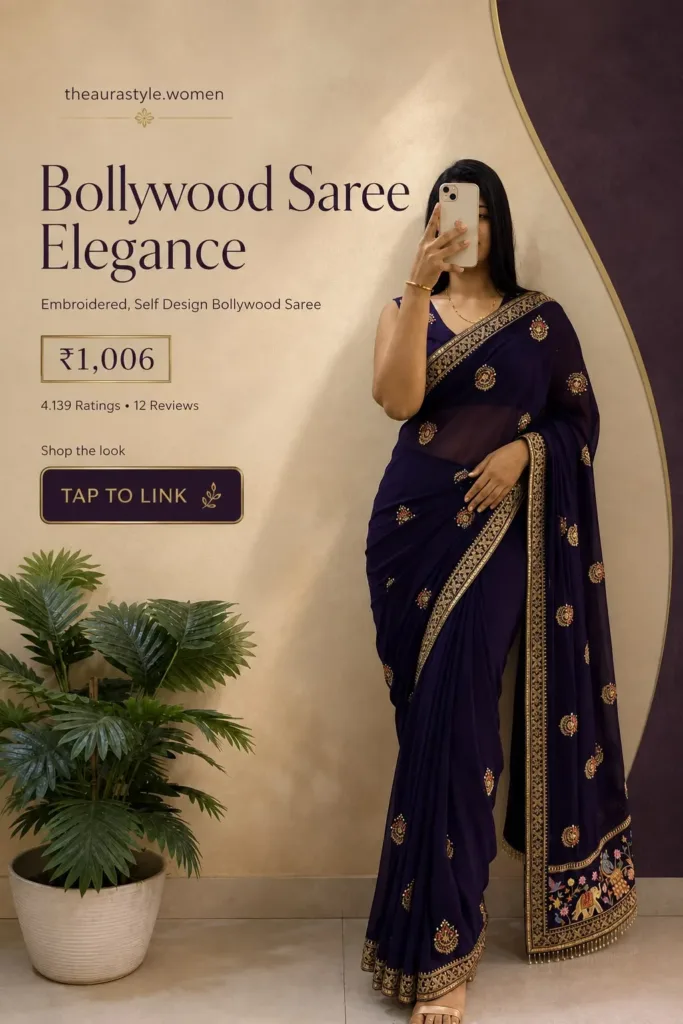
Deep purple and gold is a proven combination in Indian festive wear, and this purple embroidered saree for women leans into it fully. The base is a dark violet-purple with a soft sheen, scattered with small embroidered buttis in gold, red and green. A broad gold-toned embroidered border runs the full length, framing the drape, while the pallu carries the densest work: multicolour figurative embroidery with a fringed edge. It is the kind of saree that reads as occasion wear the moment it is unfolded.
What keeps it from tipping into heavy is restraint in the body. The buttis are spaced out, not clustered, so large areas of the purple base stay plain. That spacing is what makes this a party wear saree for women rather than only a wedding saree: the eye gets detail at the border and the pallu, and rest in between.
The border does the framing
In an embroidered saree with gold border, the border is the structural line of the whole drape. It runs along the bottom edge and up the pallu, with a repeating pattern that reads clearly even from across a room. When pleated at the front, the border stacks into parallel gold lines at the feet, which is why the model’s nude sandals work: anything heavier on the feet would compete with that stacked border. Keep the front pleats narrow and even so the border pattern stays legible instead of bunching into a gold blur.
The pallu is the statement
A saree with embroidered pallu this dense deserves to show it: drape the pallu over the left shoulder with the embroidered end falling to about the knee, so the figurative motifs and the fringe show fully. This is the most decorated part of the saree, so let it hang free rather than pinning it flat against the shoulder. In the model’s drape, the pallu falls open and the fringe edge is visible, which is correct for festive wear: the movement of the fringe is part of the effect.
The sleeveless blouse
The matching sleeveless blouse is what makes this a bollywood style saree rather than a traditional one: bare arms, V-neckline, modern drape. Bare arms balance the coverage of six yards of fabric, and the V-neckline echoes the drape’s lines. If sleeveless is not your preference, a short-sleeved blouse in the same purple works, but keep the sleeve plain: the border embroidery already supplies the detail, and an embroidered sleeve would crowd the shoulder where the pallu sits.
Jewellery and footwear
Gold is the only metal here. The model wears a single gold bangle and a delicate gold necklace, and that restraint is the right proportion against an embroidered border. Jhumkas or chandbalis in gold would suit an evening event; skip silver or oxidized jewellery, which would fight the warm gold of the border. Footwear stays low and neutral: nude or gold flats, or low block heels for a wedding. The saree’s hem does the talking at the feet, so shoes should disappear under it.
Where this purple embroidered saree for women works best
As a purple saree for festive occasions, its calendar is clear: sangeets, receptions, Diwali dinners, evening pujas. The dark purple base also makes it a strong pick for night events, where lighter sarees can wash out under artificial light. It is too ornate for daytime office wear, and that is fine. Not every saree needs to multitask.
Draping and fit notes
Get the petticoat right: it should match the purple closely, because the saree has a slight sheen and a contrasting petticoat would show at the pleats. The blouse needs a snug fit at the armhole, since a gaping sleeveless armhole ruins the clean line the whole look depends on. Pleat the pallu border carefully so the figurative embroidery faces outward. Steam or press the border before draping; a creased gold border looks tired no matter how good the embroidery is.
 WOMEN’S STYLE