The Styling Note
Why this look
earns its place.
Fit, balance, colour, and context—explained for real-world wear.
The anarkali dress outfit for women, piece by piece
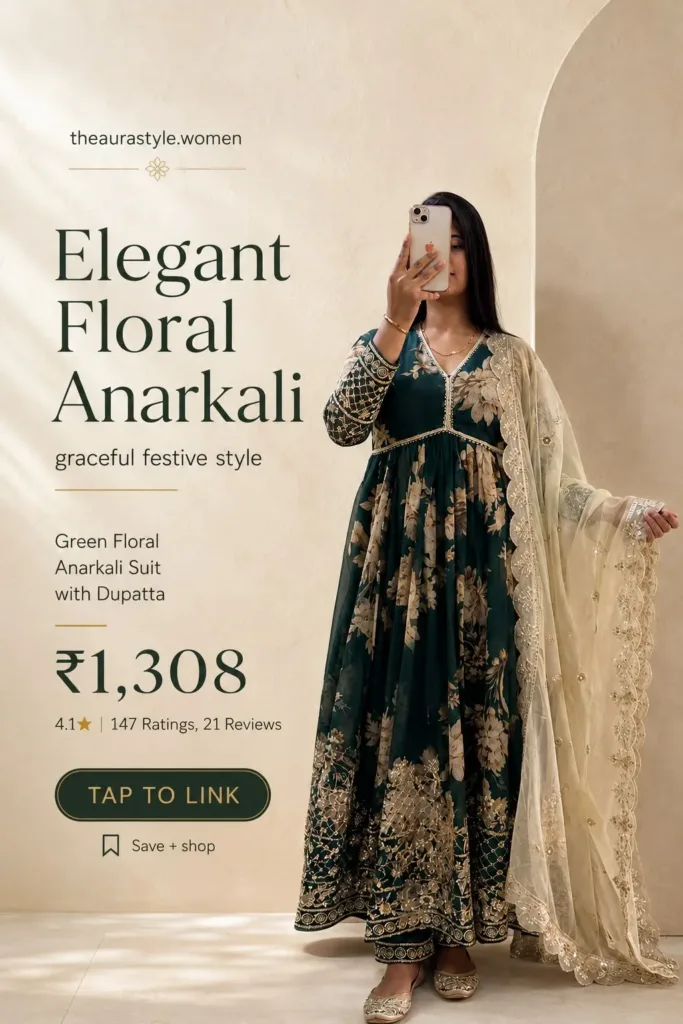
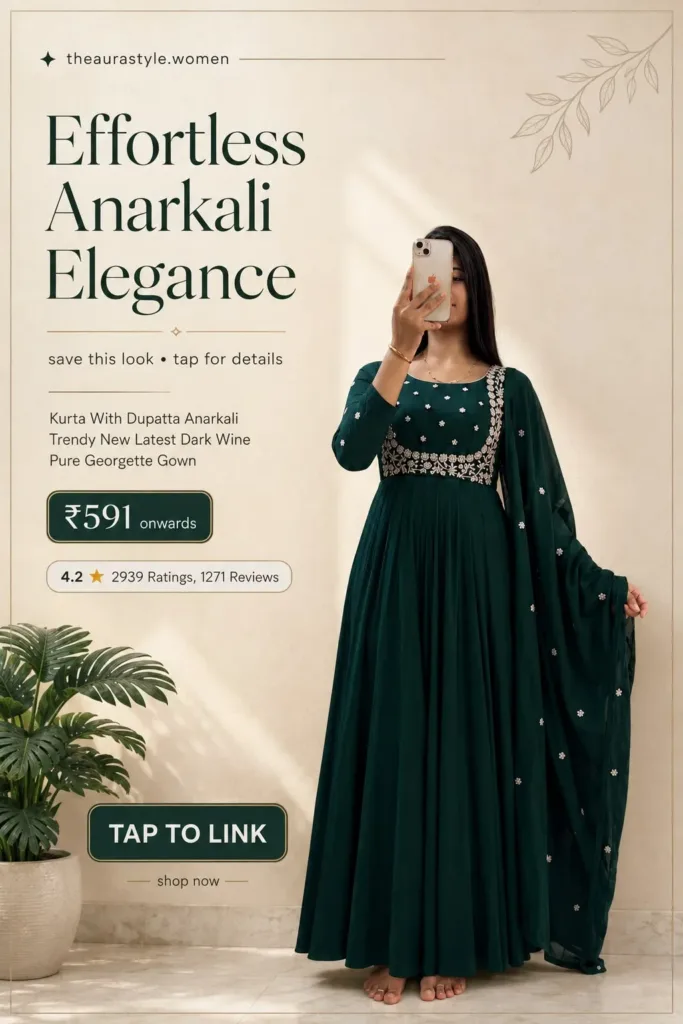
This anarkali dress outfit for women is a floor-grazing Anarkali in deep dark green georgette, cut the traditional way: a fitted bodice that ends at the waist and a long skirt gathered into it, falling in soft folds to the ankles. The neckline is round and simple. The embroidery lives on the yoke, a silver-white floral border tracing the neckline and the yoke’s lower edge, with small scattered motifs across the bodice and the three-quarter sleeves. The skirt itself is plain, which is the point. Over one shoulder falls a sheer matching dupatta dotted with the same small motifs.
Why the yoke does all the talking
Concentrating the embroidery at the yoke is the oldest Anarkali trick and still the best one. It frames the face, which is where attention naturally goes, and leaves the long skirt unbroken so the eye travels down its full length. A plain skirt on a dark colour reads taller and leaner than an embroidered-all-over one. The silver-white thread against the deep green gives contrast without heat; gold would have pushed this gown toward bridal, while silver keeps it firmly in festive-elegant territory.
The Anarkali advantage
An Anarkali is the lowest-effort festive outfit that exists. It is one garment plus a dupatta, which means no matching separates, no tucking decisions, no waistband negotiations. The flared skirt suits nearly every body: it defines the waist, skims the midsection, and gives tall frames drama and petite frames presence, provided the hem clears the floor correctly. And there is the twirl factor, which sounds frivolous until you see how a georgette Anarkali photographs in motion. Some outfits earn their keep standing still; this one earns it moving.
Styling it for the evening
Match your metals to the embroidery: silver jewellery, not gold. Small chandbalis or jhumkas, a thin bracelet, and nothing heavy at the neck since the yoke border already draws a line there. Footwear barely shows under a floor-length hem, so choose for comfort: embellished flats or low block heels in silver or nude. A small clutch in a metallic finish is enough for a bag. Hair worn down softens the traditional cut; a neat bun sharpens it for more formal functions. Pick the version that matches the room you are walking into.
Draping the dupatta on a gown
On an Anarkali the dupatta is an accessory, not a necessity, so wear it like one. The one-shoulder drape in the photo, falling over the arm, is the easiest and the most flattering; it shows the embroidered yoke instead of covering it. Pin it at the shoulder so it survives an evening of greeting relatives. For a more formal read, pleat it narrow and let it fall straight down one side. Skip the both-shoulders drape unless the function calls for it; on a gown it hides the bodice work you paid for.
Where this gown belongs
Festive evenings, Diwali parties, family functions, wedding-adjacent events where you want to look dressed without wearing a lehenga. It also works for formal dinners during the festive season and for hosting at home, where the one-piece ease really pays off. In daylight the deep green reads rich and saturated; under warm evening light it deepens toward black-green and the silver embroidery catches every bit of it. Either way, it photographs beautifully.
Fit and georgette care
The bodice must fit cleanly: Anarkali bodices that gape at the armhole or pull at the bust ruin the line the skirt needs. The waist seam should sit at your natural waist so the flare starts in the right place. Hem length matters most on a gown; it should kiss the top of the foot, not pool on the floor and not hover at the ankle. For care, georgette prefers gentle hand wash or dry cleaning, shade drying, and storage hung on a padded hanger so the gathered waist does not crease. Never wring it.
 WOMEN’S STYLE