The Styling Note
Why this look
earns its place.
Fit, balance, colour, and context—explained for real-world wear.
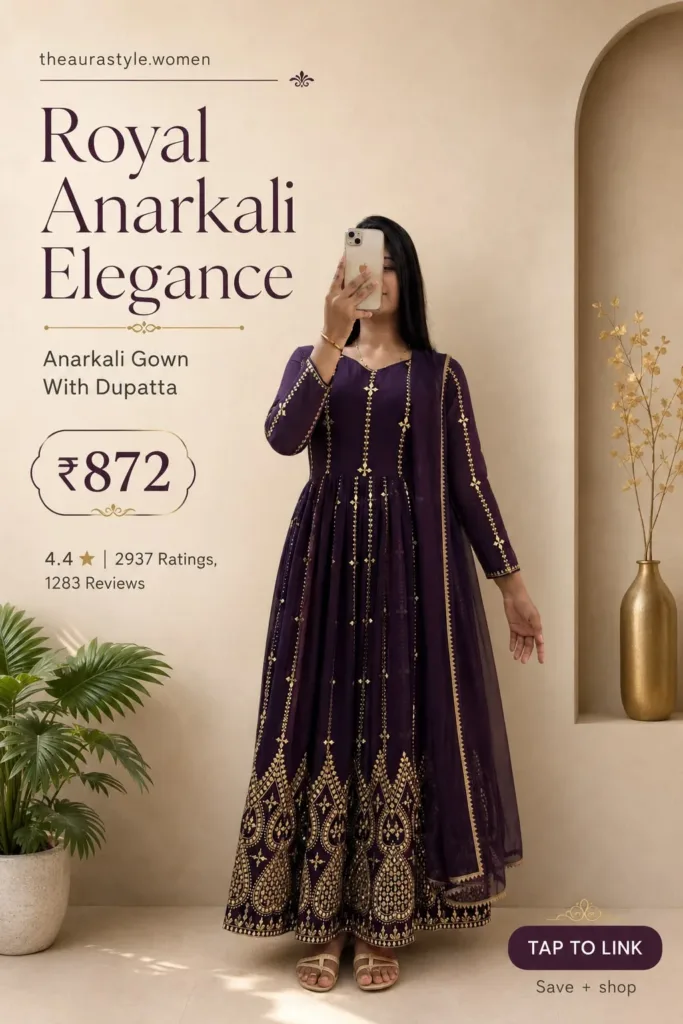
Some anarkalis whisper; this purple anarkali gown with dupatta does not. The base is a deep plum purple, and the gold work runs in thin vertical lines from the neckline straight down through the flared skirt, like pinstripes done in zari. At the hem, the gold gathers into a dense ornamental border of large arching motifs. Vertical lines plus a heavy hem is a classic festive formula: the lines lengthen, the border anchors, and the eye travels the full length of the gown.
This purple anarkali dress for women is cut like a true gown: fitted through the bodice, seamed at the natural waist, then flaring into a full circle of skirt that falls to the ankles. Full sleeves with gold cuff detailing keep the arms covered, which suits evening functions and cooler festive nights. A plum colour anarkali needs its dupatta to match exactly, and here it does: a matching purple dupatta with a gold border drapes over one shoulder, completing the set without adding a single new colour.
The gold work: lines above, motifs below
In an anarkali with golden embroidery, the work usually sits in one register; here it divides into two. Above the waist, the gold is linear: fine vertical trails with small spaced motifs that follow the body’s lines and keep the bodice looking long. Below, at the hem, it turns architectural: large paisley-arch motifs packed edge to edge in gold. That contrast is deliberate. If the hem border ran all the way up, the gown would look heavy; if the vertical lines ran all the way down without the border, it would look plain. The two registers balance each other.
Styling this purple anarkali gown with dupatta for festive evenings
For a festive evening, let the gown carry the look and keep everything else quiet. The model’s nude flat sandals are the right base: the hem border is the visual event at the feet, so shoes should disappear under it. Drape the dupatta over one shoulder with the gold border showing along its full length; pleat it narrowly so the border reads as a defined band rather than a rumpled strip. Hair in a low bun or swept to one side keeps the neckline and the vertical gold trails visible.
Jewellery: gold, and only gold
The gold work sets the metal: gold-toned jewellery, nothing else. The model wears a single gold bangle and a delicate necklace, and that proportion is correct against embroidery this present. For a wedding, add gold jhumkas; for a family dinner, the bangle alone is enough. Silver or oxidized pieces would sit apart from the warm gold of the embroidery. Keep the necklace fine and short: a long pendant would land on the vertical gold trails and tangle the two visually.
Where it earns its place
As an anarkali gown for wedding guest duty and the festive anarkali gown category generally, its calendar is clear: sangeets, receptions, Diwali parties, evening engagements. The deep plum base holds its richness under artificial light, where lighter anarkalis can wash out. It is too formal for daytime casual wear, and the full sleeves plus floor-grazing hem make it an evening creature. Plan the calendar accordingly: this gown wants after-dark occasions.
Fit notes before you buy
The bodice fit is everything. The vertical gold trails need to run straight from neckline to waist seam; if the bust pulls, the lines bow and the lengthening effect breaks. Check the waist seam sits at your natural waist, because the flare is proportioned from that point: too high and the gown reads empire, too low and the bodice looks long. The sleeves should end at the wrist with the cuff detailing visible, not swallowed. For the hem, check the length with the shoes you will actually wear: the skirt should just graze the top of the foot so the gold border shows fully without dragging.
 WOMEN’S STYLE