The Styling Note
Why this look
earns its place.
Fit, balance, colour, and context—explained for real-world wear.
What this ove elegant kurta outfit for women actually is
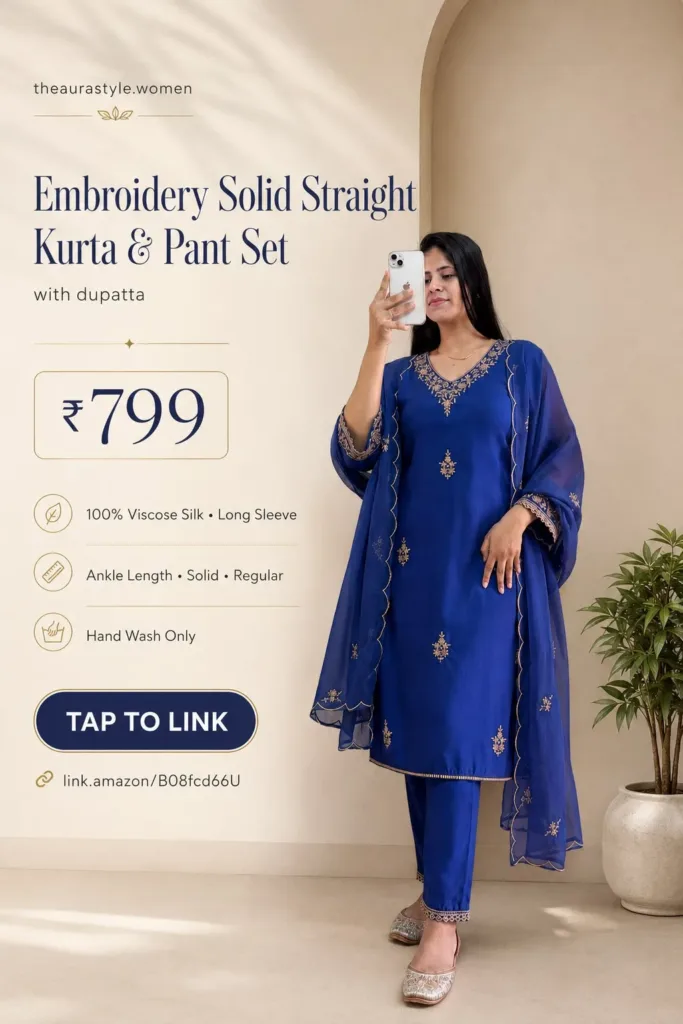
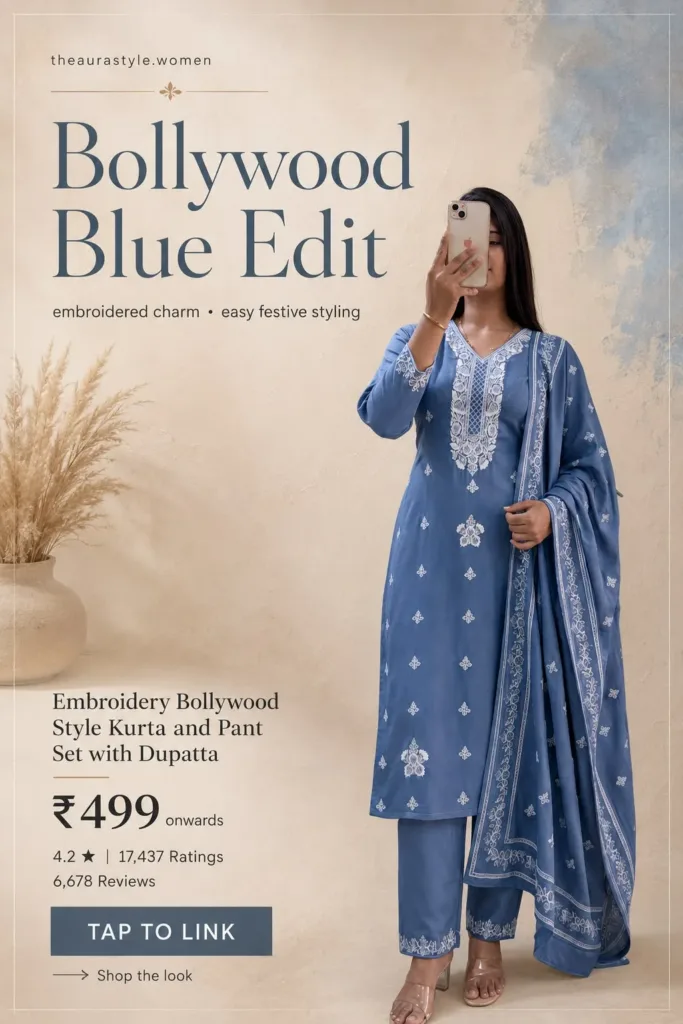
Three pieces, one price tag starting at ₹499: this ove elegant kurta outfit for women is a blue embroidered kurta, matching pants and a dupatta. The listing calls the embroidery Bollywood style, which is marketing shorthand for “noticeable from across the room.” That is not a complaint. Festive ethnic wear is supposed to be seen, and a kurta set at this price lives or dies on whether the embroidery looks deliberate rather than sprinkled on as an afterthought. Check the listing photos close up before you decide.
The number worth paying attention to is the rating count: 4.2 stars across 17,437 ratings and 6,678 reviews. Most budget ethnic listings have a few hundred ratings at best. Seventeen thousand means thousands of real buyers wore this, washed it and came back to rate it. That volume tells you more about the actual product than any product description will.
Why blue works for festive dressing
Festive ethnic wear in India defaults to reds and maroons, which is exactly why blue stands out in a group photo. A rich blue kurta photographs beautifully, suits most Indian skin tones and reads festive without trying too hard. The embroidery on this set does the decorating work, so the base color can stay solid and let the threadwork carry the occasion.
Blue also re-wears better than the traditional festive palette. A red embroidered kurta screams Diwali every time you put it on. A blue one works for a puja, a family dinner, an office ethnic day and a cousin’s roka without feeling like a repeat costume.
Styling the three pieces together
The dupatta is what makes this read festive instead of daily wear, so drape it with intent. For dinners and parties, let it fall from one shoulder; it shows off the kurta’s embroidery and stays out of your food. For family functions and pujas, drape it across both shoulders. It reads more traditional, stays put through aarti and hugs, and you stop adjusting it every ten minutes.
Footwear is simple: mojaris or juttis if you want the full ethnic register, low block heels if you will be on your feet all evening. Skip stilettos; they fight the relaxed cut of a kurta set and sink into lawns at outdoor functions.
Jewelry should follow the embroidery’s lead. A pair of jhumkas in gold or antique finish is enough. If the embroidery is heavy around the neckline, skip the necklace entirely and let the earrings do it. A bindi in maroon or black ties the whole look together if that is your thing; it costs nothing and makes the outfit read finished.
Fit checks that matter on a kurta set
Start at the shoulders. The kurta’s shoulder seam should sit at your actual shoulder; too wide and the whole set looks borrowed. Check hip room next, because you will be sitting cross-legged at some point and a tight kurta makes that miserable. Sleeve length matters more than people think: three-quarter sleeves that end mid-forearm look intentional, sleeves that end at an awkward spot look like a sizing compromise.
On the pants, check the waist. Most sets at this price have an elasticated or drawstring waist; make sure it sits flat without digging. The dupatta should be long enough to drape across both shoulders with fabric to spare. A short dupatta is the fastest way to make a kurta set look cheap, regardless of the embroidery.
Where it fits in a real calendar
This is a festive-days, puja, family-dinner and office-ethnic-day set. It handles the full Indian social calendar from September to January without breaking a sweat. It is not bridal-guest territory, and at this price it should not try to be. Its job is to make you look properly dressed for every mid-tier occasion that fills a festive season, and three coordinated pieces do that with zero morning decisions.
Here is the rewear math that justifies the buy: the kurta works with jeans for a casual Indo-western day, the dupatta lifts any solid kurta you already own, and the pants pair with a different kurta entirely. One set, bought for festive season, quietly becomes four or five outfits through the rest of the year. That is what ₹499 well spent looks like.
 WOMEN’S STYLE