The Styling Note
Why this look
earns its place.
Fit, balance, colour, and context—explained for real-world wear.
This soft pink co-ord set for women: the co-ord that thinks it’s a kurta set
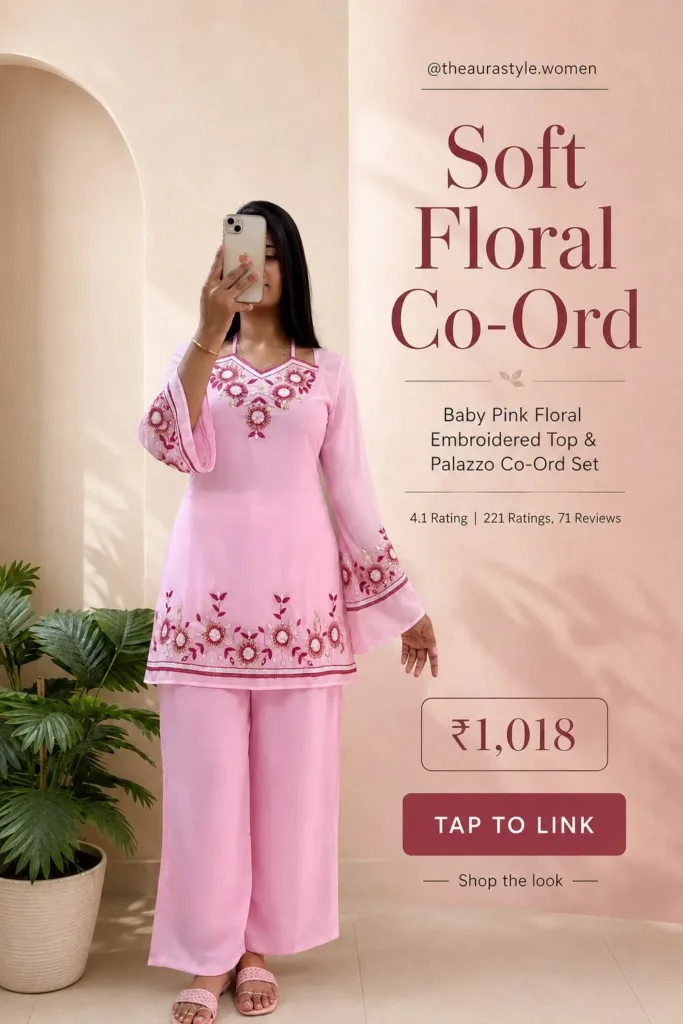
This soft pink co-ord set for women has kurta DNA. A baby pink tunic top with bell sleeves, embroidered in deeper pink florals around the neckline, along the hem and around the sleeve cuffs, paired with plain baby pink palazzo pants and pink flat sandals. The lookbook lists it at ₹1,018 with a 4.1 rating across 221 ratings, and files it as an ethnic styling pick for festive days. It reads like a short kurta with palazzos, because structurally, that’s what it is.
Where the embroidery sits, and why
The floral work is placed like a kurta’s: a yoke of embroidery framing the V-neckline, a border running along the hem, and matching bands on the flared sleeves. The thread is a deeper pink than the base, so the flowers read tone-on-tone rather than contrasting. That restraint is what keeps it daytime-appropriate. The embroidery decorates without demanding, and on the sleeves it sits at the flare, which means it moves when you do.
The palazzo stays plain on purpose
The palazzo carries no embroidery at all, and that’s the right call. An embroidered top plus embroidered bottoms would tip the set into heavy; the plain palazzo gives the eye somewhere quiet to land. It’s cut relaxed and straight, falling clean to the ankle, and the monochrome pink keeps the two pieces reading as one outfit rather than two separates that happen to match.
Styling it the ethnic way
The shot finishes the set with pink flat sandals, and matching the shoe to the outfit is the easy win here. For a more festive read, swap in gold or beige juttis. The deeper pink embroidery picks up gold nicely. Jewellery stays light: small jhumkas or studs, a thin bangle. A dupatta is optional. The set is complete without one, but a sheer white or deeper pink dupatta would push it further into festive territory for pujas.
Where this set works
Festive daytime is the home ground: pujas, family lunches, haldi-adjacent mornings, office ethnic days where you want polish without a saree’s commitment. The tunic length keeps it modest and easy to move in, which is why it also works for long daytime events. Evenings would want more weight — heavier embroidery, a silk base — so keep this one where the light is natural.
Splitting the set
The top works over white or beige straight pants when the pink palazzo is in the wash, and the embroidery carries the outfit on its own. The palazzo pairs back to a white chikankari kurti or a plain deeper-pink top for a fully monochrome day. Two pieces, one ₹1,018 set, and each half earns its place in other outfits. That’s the quiet maths behind every good co-ord.
Keeping the embroidery crisp
Floral threadwork on a light base shows wear fast, so this set wants gentle handling: wash inside out, skip the harsh spin, and never wring the bell sleeves. Press on the reverse side if the embroidery puckers. Baby pink shows stains more honestly than darker shades, so treat spills quickly. Looked after, the tone-on-tone florals keep their softness instead of going flat and fuzzy.
Fit notes: Tunic length and bell sleeves
The tunic should end around mid-thigh to hip: long enough to read kurta, short enough that the palazzo’s line stays visible. If it runs longer, the set starts reading as a dress over pants and loses the co-ord balance. The bell sleeves flare from the elbow, so check they clear the wrist comfortably and don’t drown the hand. Palazzo length matters too: full-length as photographed, hem just touching the sandal, no pooling.
 WOMEN’S STYLE